
One renewal in. The analysis, the market and the client deck out.
Fathom needs only the carrier's renewal. It reads it, reconciles it, prices the market and every plan change, and hands you the client deck under your own name. Each step below is shown on a demonstration book.
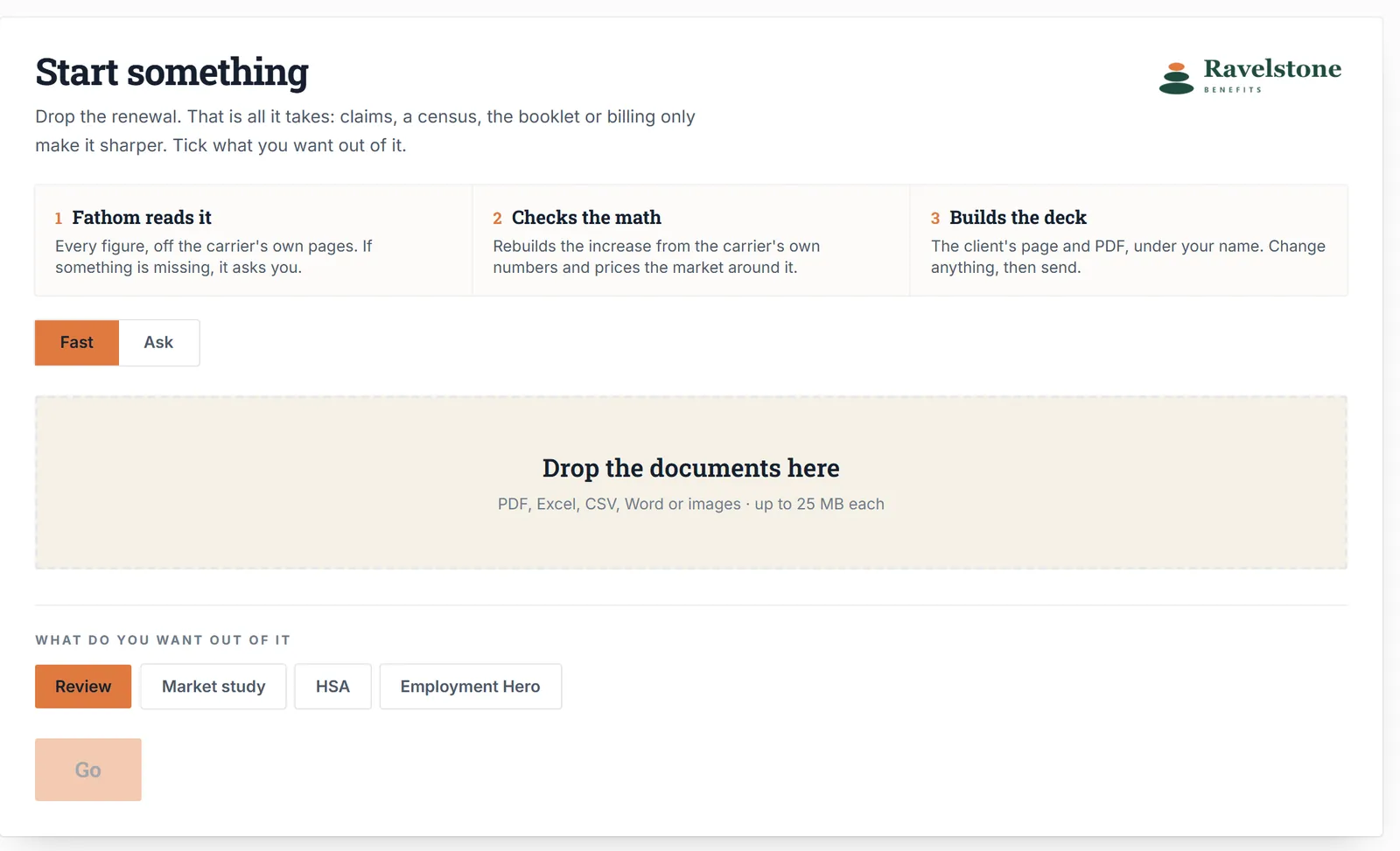
Drop the renewal. That is the whole input.
Drag the carrier's renewal into a case. Fathom reads it, checks its reading against the page and builds the case from what the carrier printed. A census, a claims exhibit or the booklet sharpen the read. None of them is required.
- Reads Canada Life, Sun Life, Manulife, Medavie, Desjardins, Equitable and Wawanesa renewals.
- Several years in one drop: the earlier cycles become the group's history.
- Benefit classes are read as classes, not blended into one plan.
- Scanned and photographed pages are read too.
- A reading the page contradicts is held for an advisor, never published.
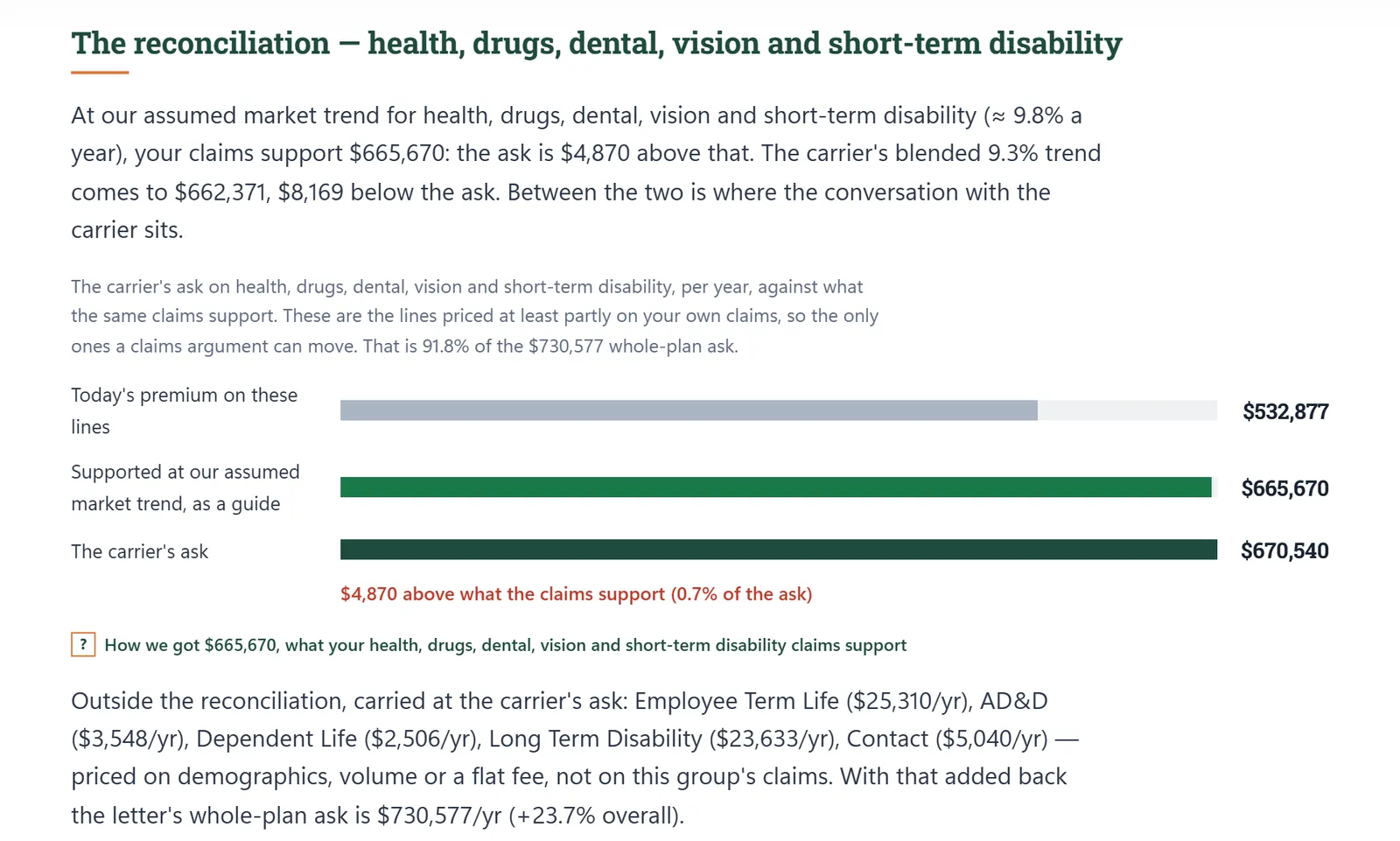
The carrier's number, rebuilt from the carrier's own figures.
Fathom takes the letter's target loss ratio, trend, credibility and pooling and works the renewal through, line by line. Where the ask runs past what the experience supports, the gap is stated in dollars a year. Where the increase is fair, it says so.
- Health, drug, dental, vision and disability, each on its own experience.
- Pooled claims and the pooling charge shown, not buried.
- With a census, demographic cost is separated from claims.
- Every figure traces to a line in the carrier's exhibit.
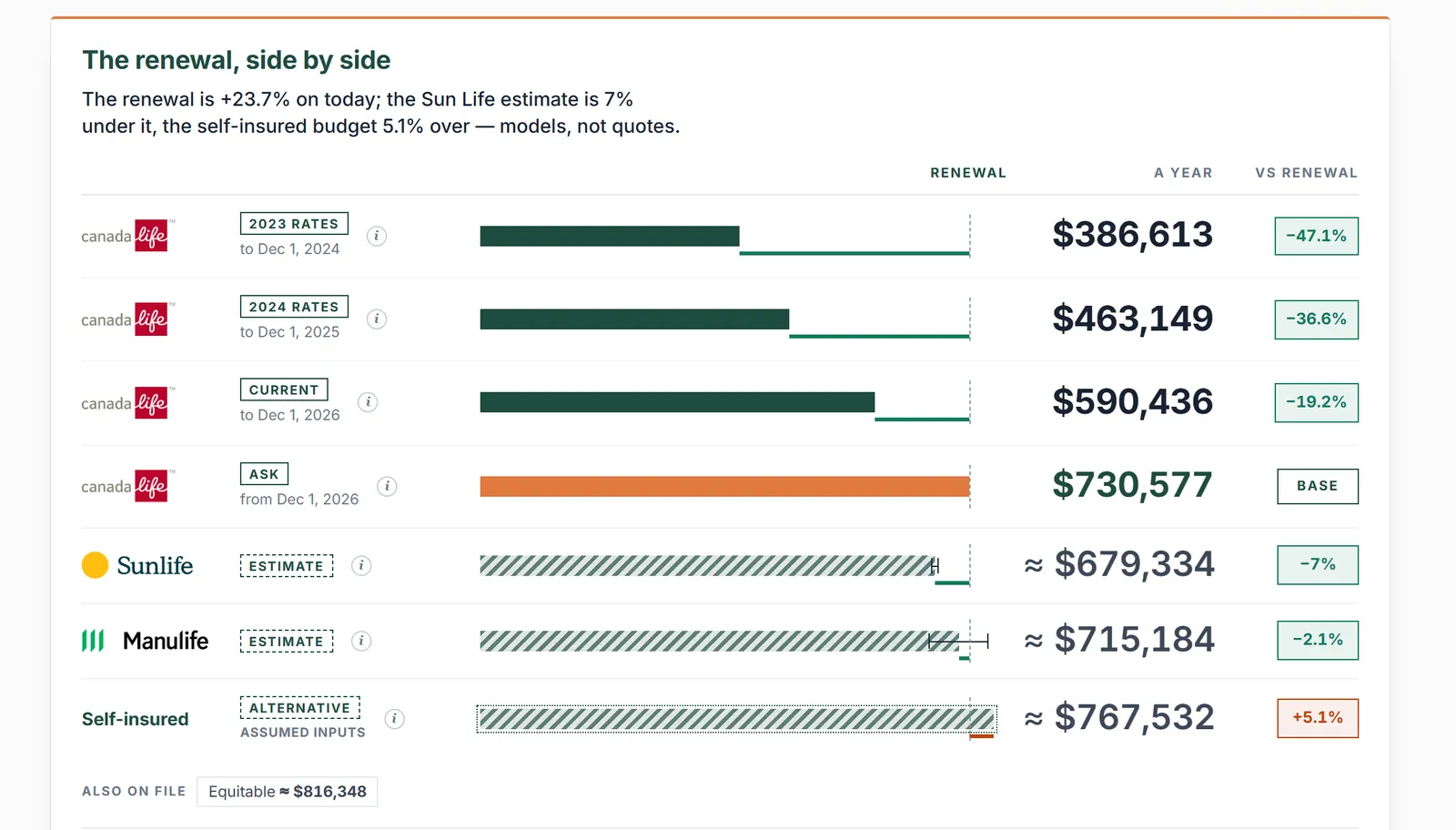
Fathom prices the market.
No chasing quotes to learn where a renewal stands. The comparison board sets today's bill, the carrier's ask and the plan you build beside Fathom's estimate of what other carriers would charge this group. Quotes that come back replace the estimates.
- Estimates are marked as estimates. A carrier with too little evidence is named with no figure.
- Name the carriers to price on each case. The incumbent is never priced against itself.
- Quoting a new group: the quote builder prices it from a census, no claims history required.
- The board goes out as the renewal sheet, in Excel and PDF.
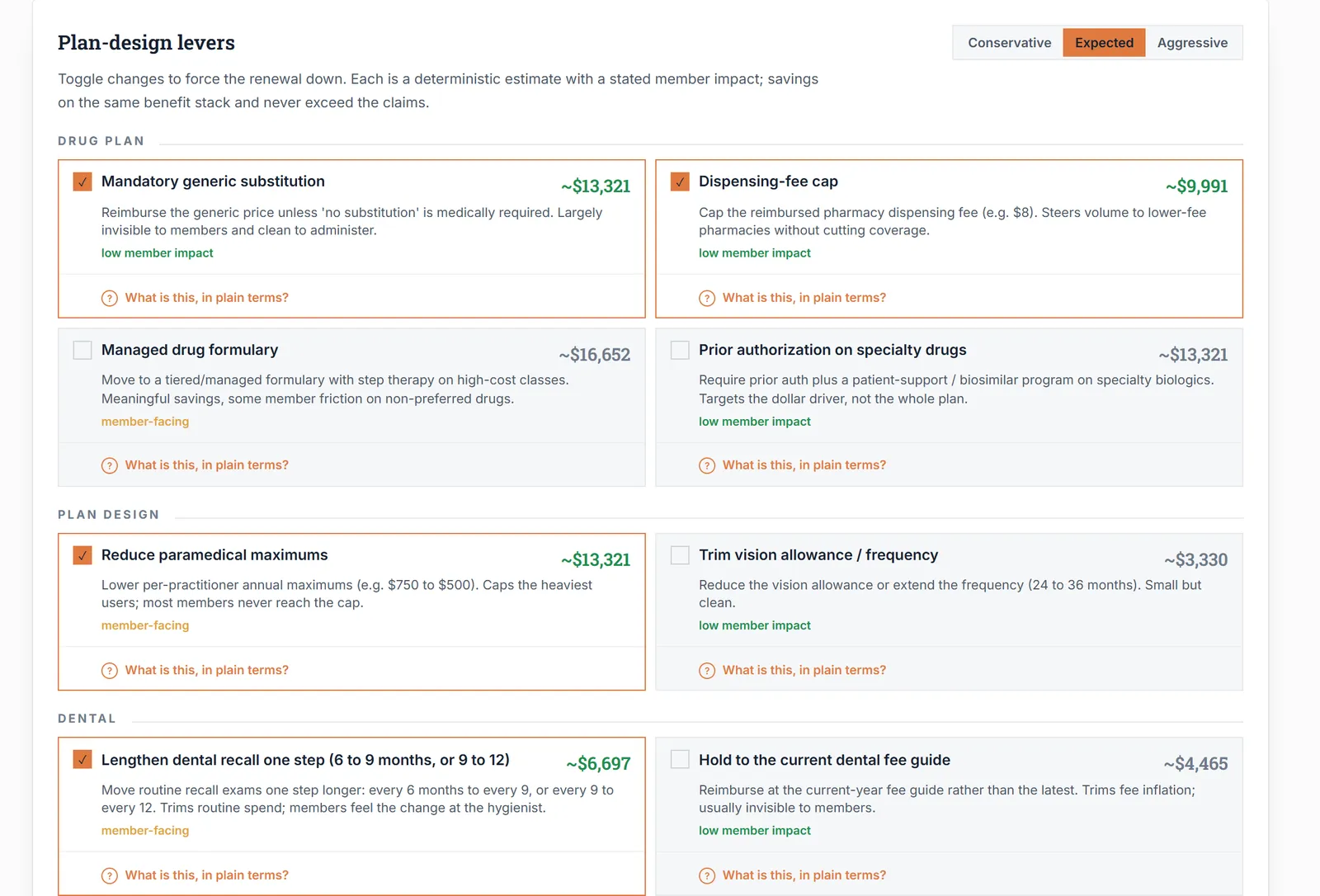
Every plan change, priced while the client watches.
Coinsurance, paramedical maximums, dental recall and fee guide, drug management, a health spending account, an HSA top-up, critical illness. Each is priced off this group's own claims, and the premium and the forecast move as you pick.
- Savings shown as a range, not a promise.
- Amendments priced to the carrier's own amendment sheet, to the dollar.
- Critical illness priced only from the case's own documents.
- Next year's renewal projected from each choice.
The client deck, laid out your way.
The composer lays out the deck the client sees. Pick the modules, set their order and layout, add your own sections. Save it as your house style and every case starts there. Your logo, your colours, your name.
- One set of figures: the deck cannot disagree with the analysis.
- Claims shown as group totals. No member is ever named.
- Change the layout without touching a figure.
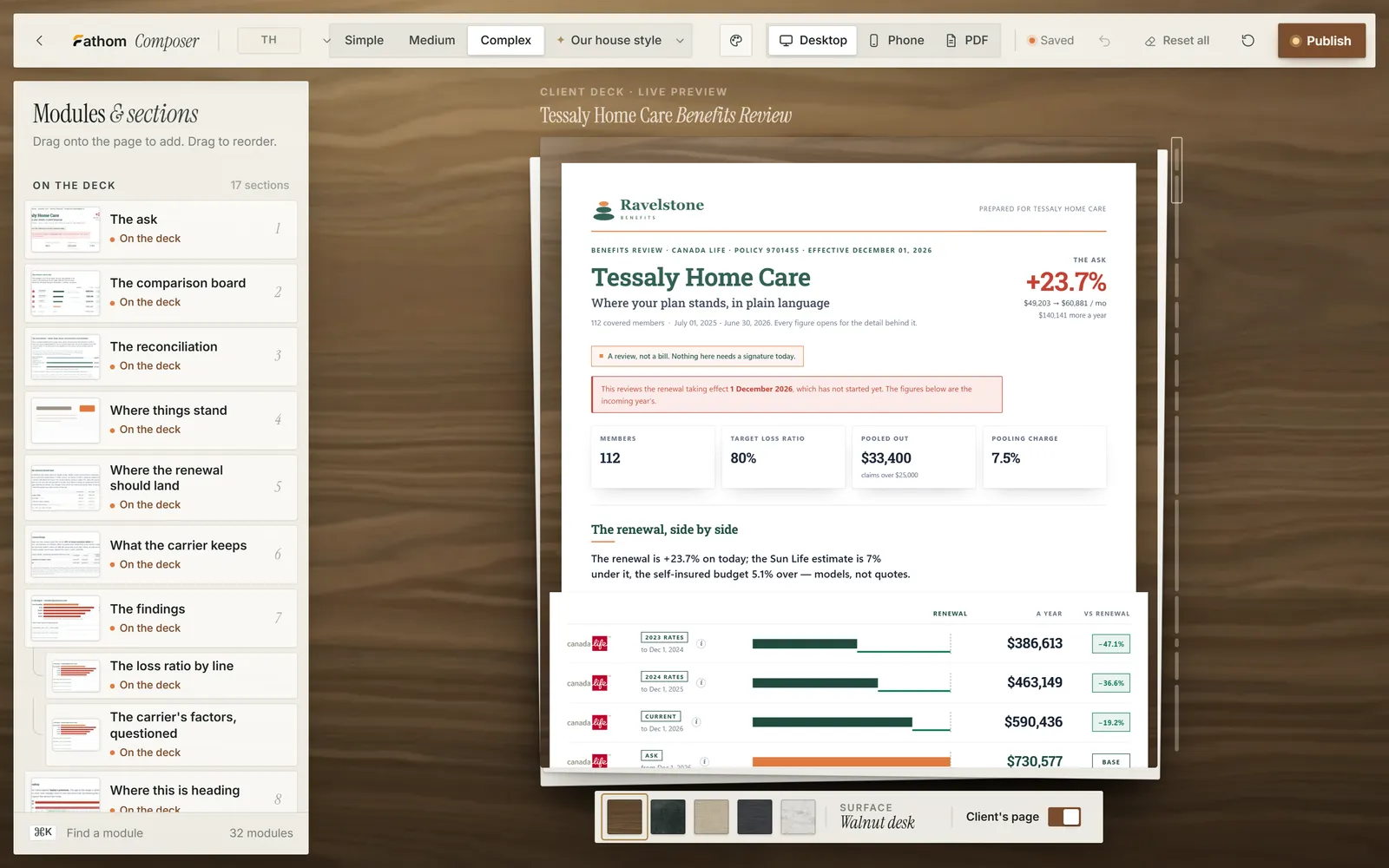
Delivered under your name.
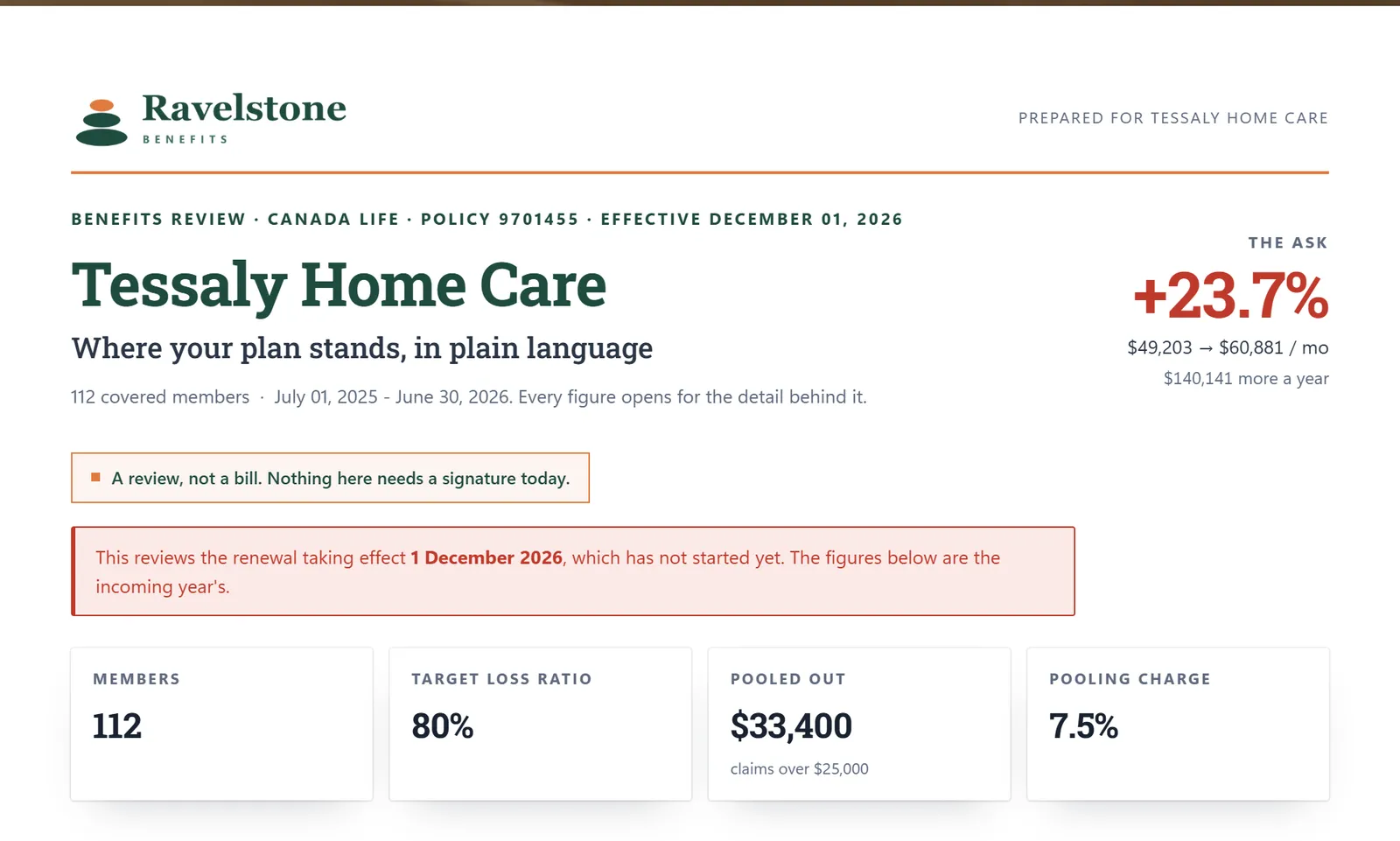
Publish the deck as a private link with a password, under your brokerage's brand. The same figures come as a PDF report and a renewal sheet. You see when the client opens it.
- Republish after a change and the link already sent keeps working.
- The PDF and the sheet are built from the deck's figures, never retyped.
- Fathom's name appears nowhere the client sees.
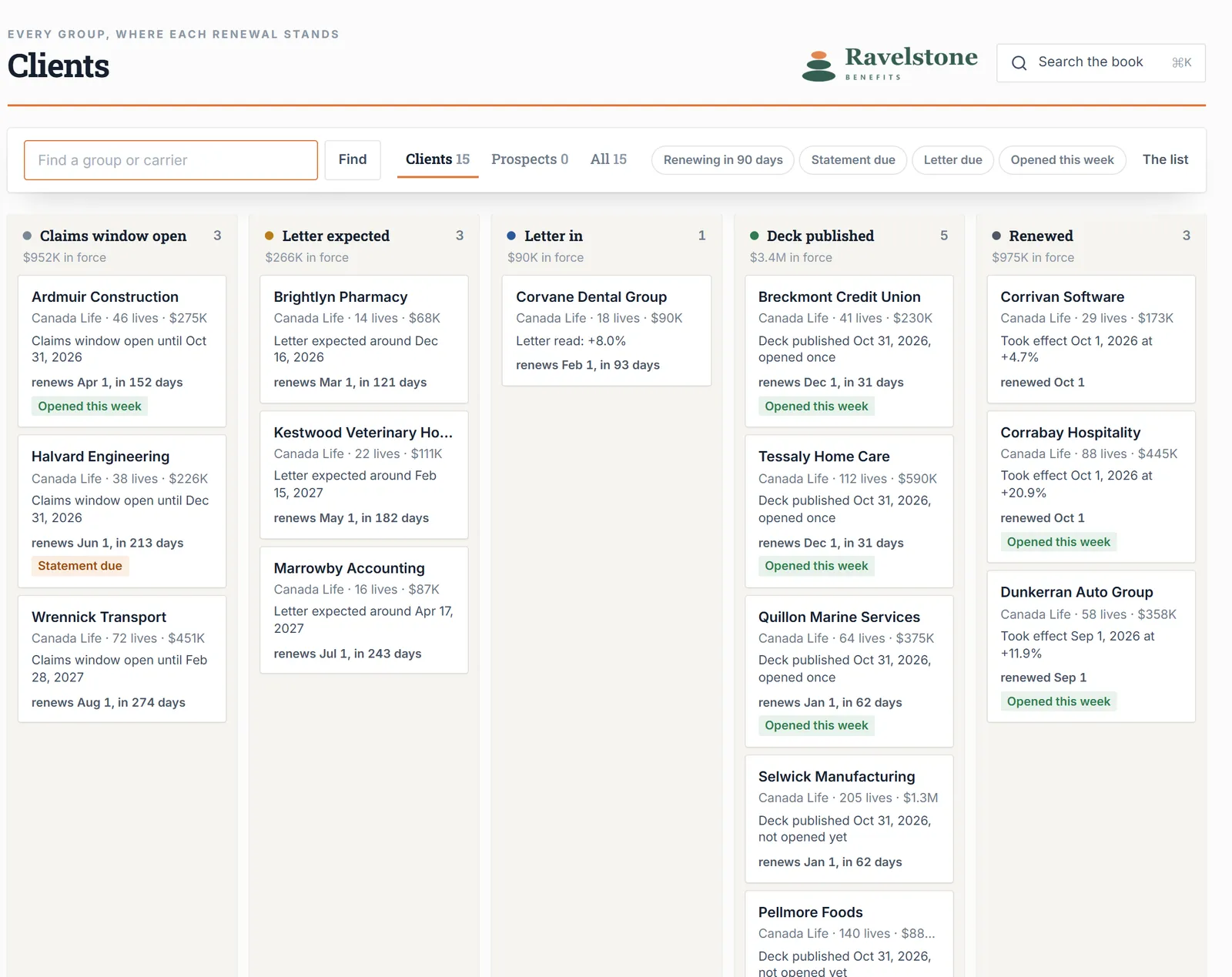
The whole book in one place.
Every client, every renewal, every year. Home shows what needs you today. The Clients board shows where each renewal stands, from the window opening to renewed. Each client's file holds its renewal history, decks, papers and benchmarks.
- Book at a glance: premium, asked against settled, loss ratios against each carrier's target, the renewal calendar.
- A forecast statement ahead of each renewal, and a reminder when one is due.
- Benchmarks from published industry surveys, and against your own book.
- Each client's papers filed with the client, renewal documents by renewal.
Send one renewal and judge it on the output.
Upload the renewal letter. You get the reconciliation back whether or not you do anything else with us.